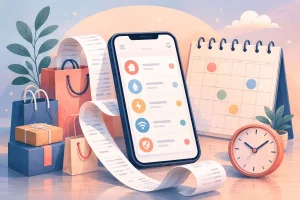

There's a quiet little drama playing out on your bank statement every month, and most of us never even notice the curtain rise. A dollar here. Two dollars there. A "small price adjustment" buried in an email you skimmed for half a second before archiving.
Individually, none of it feels like much. But add up a streaming service you forgot you had, a music app you stopped using, and three price hikes you never agreed to, and suddenly your "harmless" subscriptions are quietly draining your budget like a tap left running in another room.
The average household now spends about US$69 a month on streaming, and nearly three in four people are frustrated by the constant price hikes — yet most never cancel, because they forget the charge is even there (Deloitte, 2026).
And in 2026, that tap is running faster than ever. The way out is a ten-minute audit — list every subscription, note each renewal date, and set a reminder before each one renews, so a price hike becomes a decision you get to make. So let's turn it off together.
#The 2026 Price Hikes Aren't Slowing Down
If it feels like every service you love has gotten more expensive lately, you're not imagining it. The increases have been rolling out all year, and they keep coming.
Netflix now charges US$20 a month for its ad-free standard plan, a number that would have sounded absurd just a few years ago (CNBC, May 2026). And the smaller players are following suit: starting June 8, 2026, Starz climbs from US$10.99 to US$11.99 and AMC+ rises from US$9.99 to US$10.99 (Cord Cutters News). They join a long line of services that have already nudged their prices up this year.
"Beware of little expenses; a small leak will sink a great ship."
— Benjamin Franklin, The Way to Wealth (1758) —
#Why Small Increases Do Big Damage
Franklin wasn't talking about Netflix, but he may as well have been. The danger of a subscription isn't the price tag you see on the day you sign up. It's the invisibility of it afterwards. A recurring charge doesn't ask for permission each month. It just quietly leaves your account, year after year, whether you watched a single episode or not.
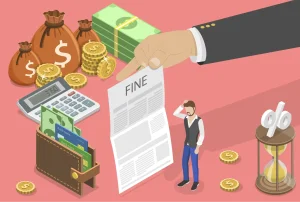
That's the same psychology that makes late payment fees so corrosive: it's not one big, obvious hit, it's a steady trickle that you stop registering as money at all. A US$2 increase feels like nothing. But US$2 a month across five services is US$120 a year, walking silently out the door.
The Deloitte numbers prove how thin the patience really is: 61% of people say they'd cancel their favourite service if the price went up by just US$5. The willingness is there. What's usually missing is simply knowing the hike happened before the money is already gone.
#The 10-Minute Subscription Audit
You don't need a spreadsheet or a finance degree to take back control. You need ten minutes and a little visibility. Here's how to do it.
#1. Get every subscription in one place
Open your bank and card statements and list every recurring charge you can find: streaming, music, cloud storage, fitness apps, that meditation subscription from January's good intentions. The goal isn't to judge, it's just to see. You can't manage what's invisible.
This is exactly what BillOut is built for: add each subscription as a bill with its amount, and instead of hunting through statements every month, they all sit in one tidy list you can actually take in at a glance.
#2. Write down the real renewal date
This is the step almost everyone skips, and it's the most important one. A subscription you "mean to cancel later" always renews before you get around to it. Logging each renewal date turns a vague intention into a deadline you can actually act on.
In BillOut, set the bill's due date to the renewal date and match how often it repeats to the subscription's billing cycle — monthly, yearly, or whatever it happens to be — and it rolls forward on its own. No re-entering it every cycle, and no charge that arrives out of nowhere.
#3. Decide: keep, downgrade, or cancel
Go down your list and be honest. Are you using it? Could a cheaper tier do the job? Is there a free, ad-supported version? You're not depriving yourself, you're making sure every dollar you spend is a dollar you chose to spend, an idea I explore more in my guide to simple financial habits.
#4. Set a reminder before each renewal
Here's the trick that makes it all stick. Set a reminder before each renewal date — a week before, three days before, or the day before, whatever gives you time to act. That little nudge is your chance to ask, "Do I still want this?" before the charge lands, not after. It's also what makes the smart "rotate-and-resubscribe" move possible: subscribe, watch the one show you wanted, then cancel before the next bill, all without losing track. This is exactly the kind of timely alert I built into BillOut's bill reminders.
Download BillOut - Bill Tracker App
Track every subscription and never get surprised by a price hike again


#Turn Price Hikes Into a Habit, Not a Headache
The streaming companies are betting on one thing: that you won't notice, and that even if you do, you won't get around to doing anything about it. A simple system quietly flips that bet in your favour.
When every subscription lives in one place with its renewal date attached and a reminder set, a price hike stops being a nasty surprise on your statement and becomes a small, calm decision you make on your own terms. And when a price does climb and you decide a service is still worth it, you just update the amount going forward, so your budget keeps telling you the truth. That's the same peace of mind that comes from never missing a bill, the kind of breathing room I wrote about in cutting bill-related stress.
So before June 8 rolls around and the next round of hikes lands, give yourself those ten minutes. Plug the small leaks now, and your great ship sails on, exactly where you pointed it.
Important Notice
The opinions expressed in this article are for general informational purposes only and are not intended to provide specific advice or recommendations for any individual or on any specific security or investment product and should not be relied on in place of professional advice. It is only intended to provide education about the financial industry.
BillOut is not responsible for the content of any site owned by a third party that may be linked to this article and no warranty is made by us concerning the suitability, accuracy or timeliness of the content of any site that may be linked to this article. BillOut disclaims all liability (except for any liability which by law cannot be excluded) for any error, inaccuracy, or omission from the information contained in this article and any loss or damage suffered by any person directly or indirectly through relying on this information.